
A sunroom is one of the few home additions that pays you back every single day, morning coffee with the light pouring in, a dry place to sit through a summer thunderstorm, a warm spot to watch a nor’easter roll across the bay without feeling a draft. For homeowners in Selbyville and across coastal Sussex County, a sunroom turns the thing that drew you to the Eastern Shore in the first place the light, the water, the outdoors into livable square footage you can use year-round.
But before you start picturing the furniture, there are three things worth understanding: what a sunroom actually costs here, what Sussex County requires before you can build one, and what makes building a sunroom on the coast different from building one anywhere else. This guide covers all three, with real local numbers and the actual permit process, not the vague “contact us for pricing” answer most sites give you.
Why a Sunroom Addition Makes Sense in Selbyville
Selbyville sits just a few miles inland from Fenwick Island and the Delaware coast, which puts local homes in a specific position weather-wise. Summers here run warm and humid off the water; winters bring cold snaps, wind, and the occasional coastal storm system tracking up Route 113. A sunroom is built for exactly that in-between reality it lets you enjoy the view and the daylight without committing to sitting outside in whatever the Atlantic is doing that afternoon.
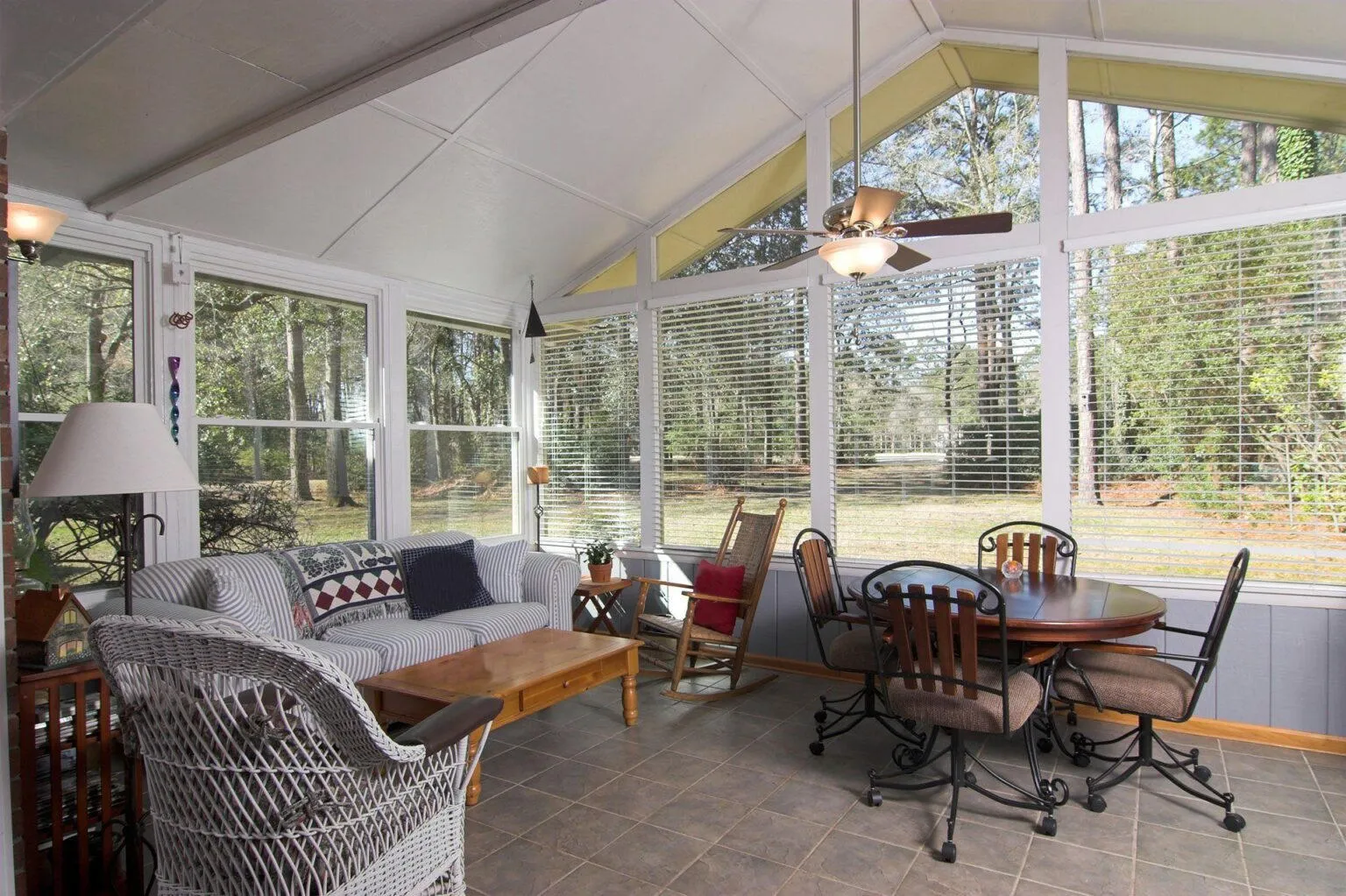
There’s also a practical space argument. Many Selbyville and Sussex County homes especially in the developments off Route 113 and the communities closer to the bay already have a back deck or patio. Converting or building off that existing footprint is one of the most cost-effective ways to add real, usable living space without the expense and disruption of a full bump-out addition.
And on the resale side, sunrooms hold genuine appeal in this market. In an area where a large share of buyers are second-home purchasers and retirees drawn to the coast, a bright, well-built sunroom is a feature that helps a listing stand out particularly in the vacation-rental communities around Fenwick Island, Bethany Beach, and Ocean View.
How Much Does a Sunroom Cost in Sussex County?
Sunroom pricing comes down mostly to one decision: three-season or four-season. Here’s how that breaks down for the Eastern Shore market in 2026.
Three-Season Sunroom: $15,000 – $30,000
A three-season room is designed for spring, summer, and fall use. It’s typically not connected to your home’s central heating and cooling, which keeps costs down. These rooms often use large windows or panel systems (like EZE-Breeze panels, popular in this area) that let you open the space up to breezes in summer and close it against cooler weather in the shoulder seasons.
This is the most popular option for Selbyville homeowners who already have a deck or patio to build on, and who want the view and the light without the higher cost of a fully conditioned room.
Four-Season Sunroom: $20,000 – $75,000+
A four-season room is fully insulated, connected to your HVAC or independently heated and cooled, and built to be used comfortably in January just as much as July. Because it’s essentially a full conditioned addition to your home with the insulation, electrical, and climate control that implies it costs more and involves a more involved build.
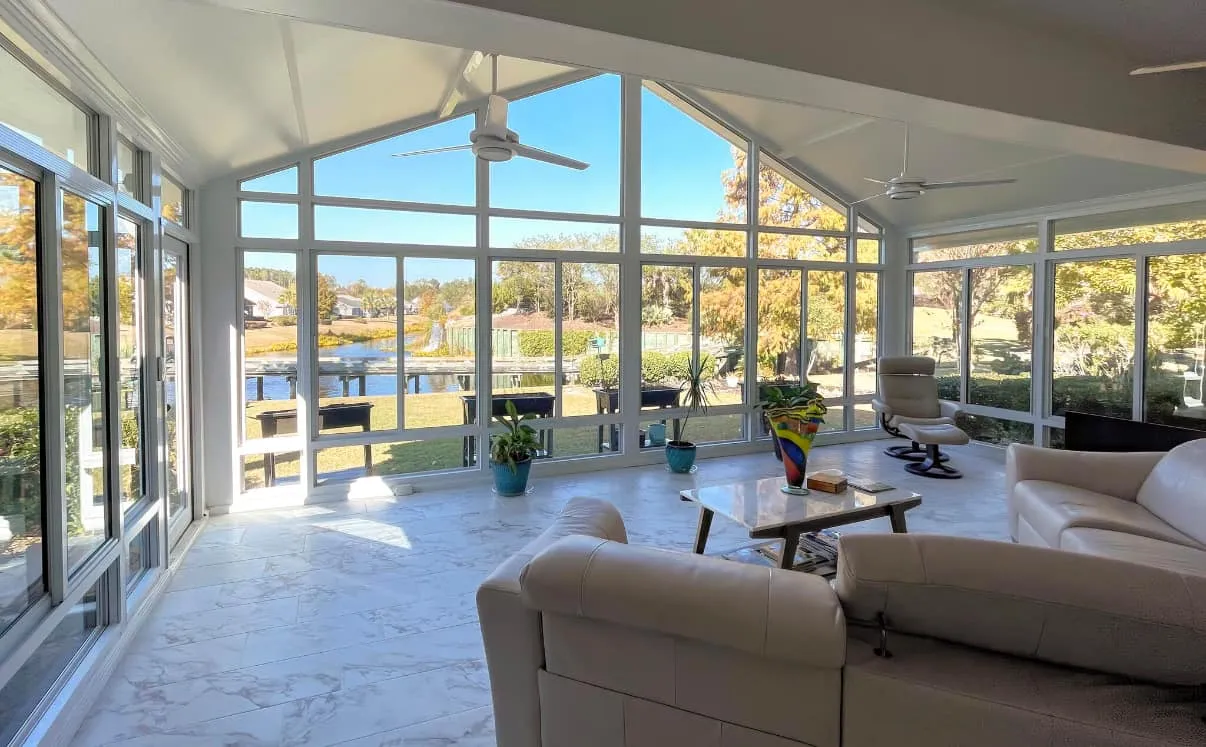
The wide range reflects how much the specifics matter. A modest four-season room built off an existing, structurally sound deck lands near the lower end. A large custom room requiring a new foundation, significant structural work, and premium glass pushes toward the top.
What Drives Sunroom Costs Up or Down Here
Existing structure. If you already have a deck or patio that’s structurally sound, you’re ahead the foundation work is one of the biggest cost variables. Building from scratch adds significantly.
Foundation and flood considerations. In coastal Sussex County, homes in designated flood zones may need to meet elevation requirements or use flood-resistant construction methods which affects both cost and design. More on that in the permit section below.
Three-season vs. four-season. As covered above, climate control is the single biggest cost line. If you don’t need January usability, a three-season room delivers most of the enjoyment at a lower price.
Glass and materials. Coastal homes benefit from higher-grade, energy-efficient glass and materials rated for salt air and humidity worth the investment here in a way it might not be inland.
These ranges are estimates based on current 2026 Sussex County and Delaware market data. Your actual cost depends on your home’s specific conditions, the room’s size and type, and site factors. Contact Vasco Property Services for a free itemized estimate specific to your property.
Permits and Regulations: What Sussex County Actually Requires
This is where most homeowners get tripped up and where most sunroom articles wave their hands and say “you’ll probably need a permit.” Here’s the actual process for Sussex County, because a sunroom is not a project you can build without one.
Yes, You Need a Permit
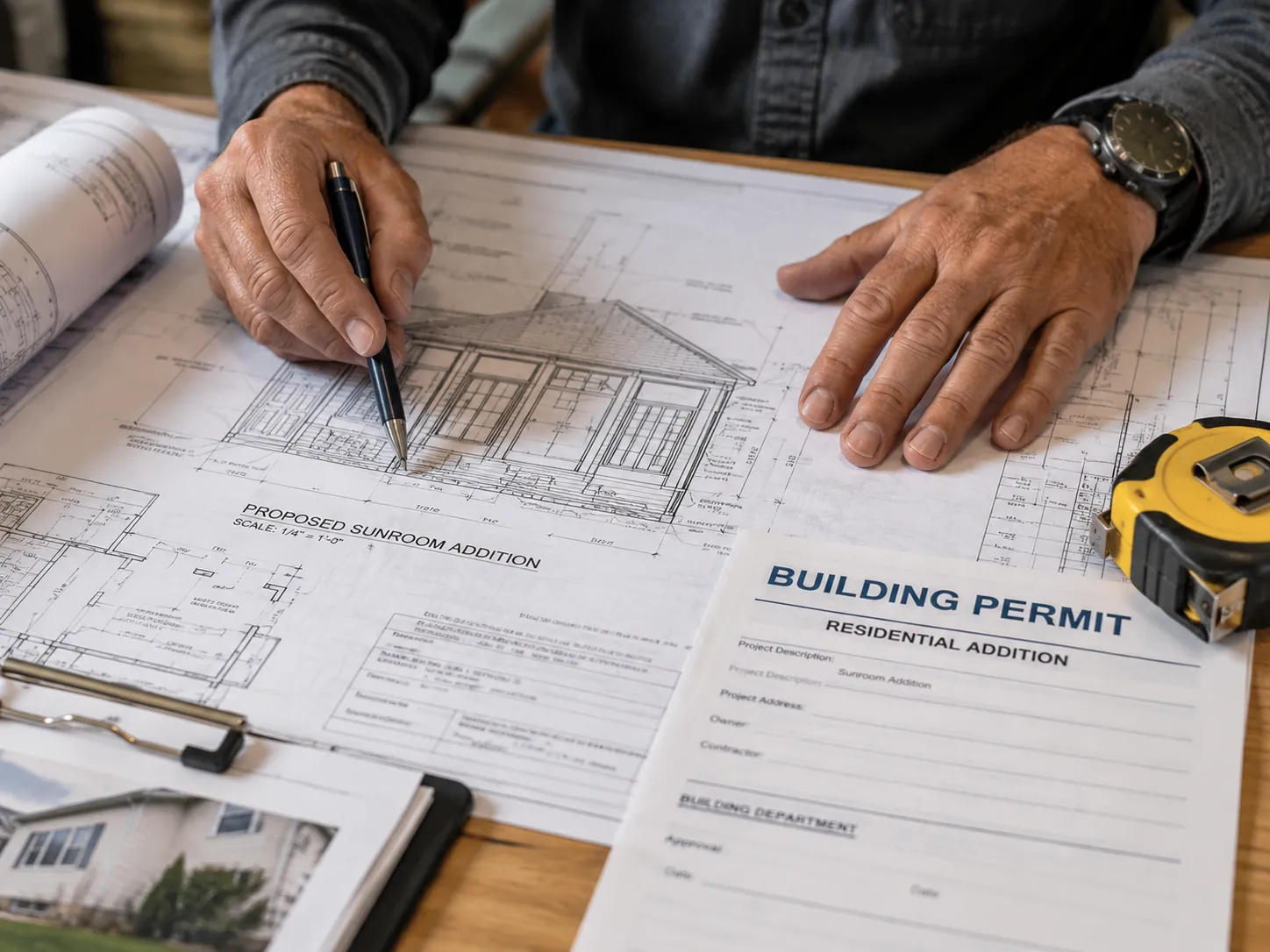
Sussex County explicitly lists wood decks, porches, and sunrooms among the projects that require a building permit. This is handled through the Sussex County Building Permit Section (302-855-7720). Building a sunroom without the proper permit can create serious problems down the line failed inspections, complications when you sell the home, and issues with homeowners insurance if anything goes wrong with an unpermitted structure.
For reference, projects that don’t require a county permit include painting, replacing flooring, and swapping out two or fewer existing windows but a sunroom addition is well beyond that threshold.
The Residential Standard Plan and Erosion Control
Here’s a step most homeowners (and a lot of the competing articles) miss entirely: Sussex County requires a Residential Standard Plan as part of obtaining a building permit. And if your project disturbs 5,000 square feet or more of land, Delaware’s Sediment and Stormwater Regulations require a Sediment and Erosion Control Plan through the Sussex Conservation District, located at 23818 Shortly Road in Georgetown. The good news approval for the Residential Standard Plan is typically issued within 24-48 hours, whether you apply online or in person.
Setbacks and Zoning
Sussex County enforces setback requirements the minimum distance a structure must sit from your property lines and these vary by zoning district. The county’s Planning and Zoning Department (302-855-7878) is the authority on what applies to your specific lot. If your property sits within 600 feet of State Route 113 anywhere between Milford and Selbyville, you may also fall under the Route 113 Highway Corridor Overlay Zoning District, which carries its own buffer and setback requirements on top of the standard zoning rules.
The 2027 Energy Code Change, Plan Ahead
Here’s something almost no one is talking about yet, and it matters if you’re considering a four-season sunroom: effective January 1, 2027, Sussex County will require all conditioned residential additions to comply with the 2024 IECC energy code. Plans submitted after December 31, 2026 will need to include an energy compliance report, such as a REScheck.
A four-season sunroom is a conditioned addition, which means this applies directly to it. If you’re planning a four-season room, understanding this deadline helps you and your contractor plan the timing and the design correctly and it’s exactly the kind of detail a contractor who works in Sussex County every day should be raising with you before you start.
Flood Zones and Coastal Construction Near the Bay
Because Selbyville sits close to the coast and the bay, flood-zone considerations are a real part of sunroom planning here in a way they simply aren’t for inland projects. Structures built in designated flood zones may need to meet specific elevation requirements or be built with flood-resistant materials. This affects the foundation approach, the design, and the cost.
This is one of the clearest reasons to work with a contractor who builds on the Eastern Shore specifically. A builder who regularly works in Fenwick Island, Bethany Beach, and the bayside communities around Selbyville already understands how flood maps, elevation requirements, and coastal building methods factor into a sunroom project. That knowledge prevents expensive surprises and keeps your project moving through inspections cleanly.
How to Choose the Right Sunroom Contractor in Selbyville
A sunroom is a permanent addition to your home, and the quality of the build shows for decades. A few things to look for when choosing who builds yours:
Local permit knowledge. Ask directly how familiar they are with the Sussex County permit process. A contractor who works here regularly will know about the Residential Standard Plan, setback rules, flood-zone requirements, and the upcoming 2027 energy code change without having to look them up. If they seem unsure about the permit process, that tells you something.
They pull the permits. A reputable contractor handles the permitting as part of the project rather than leaving it on you. This protects you and ensures the work is properly inspected and on record.
Coastal building experience. Salt air, humidity, and flood-zone construction are specific to this area. Ask to see sunrooms they’ve built in nearby coastal communities, not just any sunroom work. The same applies if you’re weighing a sunroom against a screened porch or enclosed porch a contractor who builds both can walk you through which one actually suits how you want to use the space.
Clear, itemized estimates. You want a written breakdown, foundation, structure, glass, electrical, HVAC if applicable, permits not a single lump-sum number. An itemized estimate lets you understand where the money is going and make informed choices.
A written contract. Scope, materials, timeline, and payment schedule should all be in writing before work begins.
Why Selbyville Homeowners Work With Vasco Property Services
Vasco Property Services is based right here in Selbyville, at 2 Discovery Lane, building additions and outdoor living spaces across Sussex County and the Eastern Shore. Because we work in this area every day, we know the Sussex County permit process, the coastal building requirements, and the specific conditions that affect a sunroom build near the bay.
We build both three-season and four-season sunrooms as part of our home additions work, and we handle the full process, design, permitting, and construction so you’re not left navigating the county building office on your own. Every project starts with a free, no-pressure consultation and a clear, itemized estimate specific to your home and your goals.
Whether you’re building off an existing deck in one of the communities along Route 113 or planning a full four-season room to take in the bay views year-round, we’ll give you a straight answer on what’s possible, what it will cost, and what the process looks like from start to finish.
Frequently Asked Questions
How much does a sunroom cost in Selbyville, DE? For the Sussex County market in 2026, a three-season sunroom typically runs $15,000–$30,000, and a four-season (fully heated and cooled) sunroom runs $20,000–$75,000 or more. The biggest cost factors are whether you’re building on an existing deck or patio, whether it’s three- or four-season, and any flood-zone or foundation requirements specific to your property.
Do I need a permit to build a sunroom in Sussex County? Yes. Sussex County specifically requires a building permit for sunrooms, decks, and porches, handled through the Sussex County Building Permit Section (302-855-7720). The permit process also involves a Residential Standard Plan, and larger projects may require a Sediment and Erosion Control Plan through the Sussex Conservation District. A qualified local contractor will handle this process for you.
What’s the difference between a three-season and four-season sunroom? A three-season sunroom is used spring through fall and is typically not connected to your home’s heating and cooling, making it more affordable. A four-season sunroom is fully insulated and climate-controlled for year-round use, which costs more but gives you comfortable use even in a Delaware winter. For a coastal home where you want to enjoy bay views in January, a four-season room is worth the additional investment.
Will a sunroom addition affect my property taxes? Adding conditioned, permitted living space to your home can affect its assessed value, which may impact property taxes. This varies by situation, and it’s worth discussing with your contractor and checking with Sussex County during planning so there are no surprises.
Can I build a sunroom on my existing deck? Often, yes and it’s one of the most cost-effective ways to add a sunroom, since the foundation is a major cost variable. The existing deck needs to be structurally sound and able to support the additional load and any required footings. A contractor will assess whether your current deck can serve as the base or whether structural upgrades are needed.
How long does it take to build a sunroom on the Eastern Shore? Timelines vary by scope, but most sunroom projects run several weeks from permit approval to completion, with three-season rooms generally faster than four-season builds. Permit processing, material lead times, and weather all factor in. Planning ahead especially with the January 2027 energy code change approaching for four-season additions helps keep your project on schedule.
Bring the Coast Indoors, the Right Way
A well-built sunroom is one of the most rewarding additions you can make to an Eastern Shore home. It gives you the light, the view, and the outdoor connection that make living near the coast special while keeping you comfortable through everything the weather throws at you. The key is building it right: the correct permits, the correct coastal construction methods, and a design suited to how you actually want to use the space.
At Vasco Property Services, LLC, we build sunrooms and home additions throughout Selbyville, Millsboro, Ocean View, Bethany Beach, Rehoboth Beach, Fenwick Island, Lewes, Berlin, Ocean Pines, and Ocean City. Call us at (443) 880-8891 or request a free estimate online, and we’ll walk you through your options, costs, permits, design, and timeline with a straight, no-pressure conversation about what works best for your home.
About the Author
The Vasco Property Services Team
Vasco Property Services, LLC is a residential and commercial construction company based in Selbyville, DE, serving homeowners across Sussex County, DE and Worcester County, MD. Our team specializes in home additions, sunrooms, exterior renovations, and full home remodeling across the Eastern Shore. Every article on this blog is written and reviewed by our contracting team, drawing on real projects and firsthand knowledge of the permit requirements, coastal building conditions, and communities specific to Selbyville and the Delmarva Peninsula.